

Smart #5 (2025) Review
Introduction
Around the turn of the century, Smart was busy making its name as a purveyor of tiny city cars, capable of being abandoned perpendicularly in parallel parking spaces. But times have changed, and the profit in small cars is slim, so now the brand has pivoted to larger vehicles. And this, the Smart #5, is proof that the brand has really crossed the rubicon.
A chunky, boxy family SUV designed to rival the likes of the Skoda Enyaq and VW ID.4, this is anything but a compact car. Instead, it has put Smart’s rounded, modern design cues on something roomy and practical, in the hope it can not only be a credible family bus, but also remain true to Smart’s fun and futuristic image. It’s a tough ask, but with the backing of German giants Mercedes-Benz, Smart will undoubtedly be hopeful of success.
Select's rating score* - 3.9 / 5
At a Glance
The #5 might look a bit like a Jeep, but this is actually Smart’s brave new look. Two-tone roof designs, rounded edges and a kind of Tonka chunkiness give this car a bit of solidity, while still ensuring it feels fresh and modern. It makes the car roomy, too, with a massive boot, a front luggage compartment and loads of space in the cabin.
Speaking of the interior, there the design language continues with a clean dashboard dominated by technology, including a very slick and stylish touchscreen. It might not be the easiest screen to navigate, but it looks great and it has allowed Smart to clean up the cabin beautifully, providing a minimalist and well-made environment in which to while away the miles.
Under the skin, the #5 is offered with a range of different batteries and motors, ranging from the most basic, 76kWh single-motor examples to the range-topping Brabus, with a 100kWh battery and two motors producing more than 640hp. Every version has plenty of performance and an official range of more than 250 miles, although naturally the bigger battery generally provides more range than its smaller stablemate.
On the road, meanwhile, the #5 is impressively comfortable and supple over the bumps, even in its sportiest trims. Admittedly, that means the Brabus model doesn’t quite have the body control you might hope for, but the others make brilliant long-distance electric vehicles that are competent everywhere, but feel particularly sublime on the motorway.

Key Features
The #5’s design is one of its most important features – Smart willingly sacrificed a bit of range and efficiency to create that boxy shape – and it looks very modern and cool. The square image won’t suit everyone, but it’s unquestionably distinctive and it still has that premium feel on which Smart has pinned its hopes.
Adding to that premium feel is the supple ride comfort that characterises every version of the #5. Even the sportiest Brabus version, with its immense power and two electric motors, is comfortable and smooth on a long drive, while the 100kWh battery’s range means the car is quite well suited to a long motorway journey.
Apart from that, the #5’s space is one of its biggest selling points. The boot is enormous – at 630 litres it’s larger than that of the Skoda Enyaq – and it comes with a pretty sizeable front luggage compartment, too. Or at least it does if you choose a single-motor #5. The space in front of the twin-motor car is slightly smaller, but it’s still useful for charging cables and the like. And when you combine that cargo-carrying capacity with ample space in the back seats, the #5 becomes a very practical electric family bus.
Range & Batteries
The #5 range is quite varied, but there’s essentially a choice of two different battery sizes. Opt for the basic 76kWh unit and you get 288 miles of range, while the larger 100kWh battery increases that to a maximum of 366 miles. Opt for an all-wheel-drive, twin-motor version, however, and that range will suffer slightly.
While those figures sound pretty good, it should be noted that the Smart’s batteries are larger than those of equivalent rivals, so the efficiency isn’t quite as good as that of an Enyaq, for example. But the fact of the matter is the Smart will have plenty of real-world range for most customers, and long journeys won’t be an issue. Particularly with its rapid charging capabilities, which we’ll come back to later.

Performance & Drive
The #5 range is a bit complicated, but happily, every version will perform perfectly adequately on the road. Even the most basic Pro version, with its smaller battery, has a 340hp electric motor driving the rear wheels, and the instant torque from that is enough to take the car from 0-62mph in less than seven seconds. That’s pretty good going for a big SUV.
Step up to the Pro+, which gets the larger 100kWh battery and a 363hp electric motor, and the performance improves slightly, dropping the 0-62mph time by almost half a second to 6.5 seconds. That kind of performance is usually reserved for hot hatchbacks and big executive cars with 3.0-litre engines, so it ensures the Smart is no slouch, despite Pro+ being the most efficient model on paper.
But while the Premium gets the same powertrain as the Pro+, the Pulse version is the first all-wheel-drive option, combining the 100kWh battery with two electric motors to produce a massive 588hp and offer a 0-62mph time of 4.9 seconds. That’s ballistic pace, and it’s faster than anyone will ever need it to be in any situation.

But the king of #5 performance is the Brabus, which gets 646hp from its brace of electric motors, allowing it to race from 0-62mph in a stomach-churning 3.8 seconds. In a big, boxy SUV, that kind of pace is outrageous.
Yet even with the Brabus trim, the #5 is still a very comfortable and easy car to drive. Sure, it’s quick – no matter which version you choose – but the ride is soft and supple so it soaks up the bumps really well, particularly at higher speeds. We haven’t come across an electric SUV that rides this well outside the big premium brands. It’s that good.
However, the softness of the ride means the handling isn’t quite as impressive. It’s neat and tidy, with predictable responses to your steering inputs and plenty of grip, but there’s a little bit of body movement. That’s no problem in a Pro+ that’s designed for long-distance comfort, but those who’ve chosen the Brabus in search of a more performance-orientated feel might be surprised by the relative lack of body control.
For most, though, the #5 will be a brilliant family SUV, with great long-distance capability and impressive comfort around town. And with performance to spare, it’s going to tick lots of boxes for lots of customers.

Charging
Smart has made quite a big thing of the #5’s charging capabilities, and there are some impressive numbers kicking around in the fine print. The bigger 100kWh battery has the ability to charge at more than 400kW, which means it could be charged from 10% to 80% in less than 20 minutes. We’ve seen it take as little as 15 minutes.
That’s great, but there’s a catch. While the car is capable of doing that, 400kW chargers are few and far between, so you’re unlikely to find more than 350kW in the UK. Still, such a charger could conceivably give you the best part of 300 miles of driving range in 20 minutes or so – perfect if you want to grab a comfort break, a snack and a fresh cup of coffee while en route.
Naturally, the 76kWh battery isn’t quite so clever, but it can still be filled from 10% to 80% in around 30 minutes courtesy of its 150kW charging capability. And it’s quicker to fill from a domestic ‘wallbox’ charging point overnight. Opt for the bigger battery, and a conventional 7.4kW home wallbox will take 13 hours to fill the car.

Running Costs & Emissions
One of the key reasons for choosing an electric SUV such as the #5 is to keep fuel bills to a minimum, and the #5 will definitely do that. However, it isn’t quite as efficient as some of its rivals, and filling that bigger battery will cost more than filling a rival’s smaller battery – yet the range you achieve will be comparable.
That said, the difference will not be massive, so while the #5 might be a tad more expensive to charge than its rivals, it won’t break the bank. And if you opt for the high-performance Brabus version, you won’t find many 600hp SUVs that are this cheap to run.
That’s especially true if you’re a company car driver. Electric cars still qualify for huge discounts on company car tax, and a long-range vehicle such as this makes an awful lot of sense for those driving company-funded vehicles. Long story short, the Smart will save you money compared with a petrol- or diesel-powered car, but other electric SUVs might save you a few pence more.

Interior & Technology
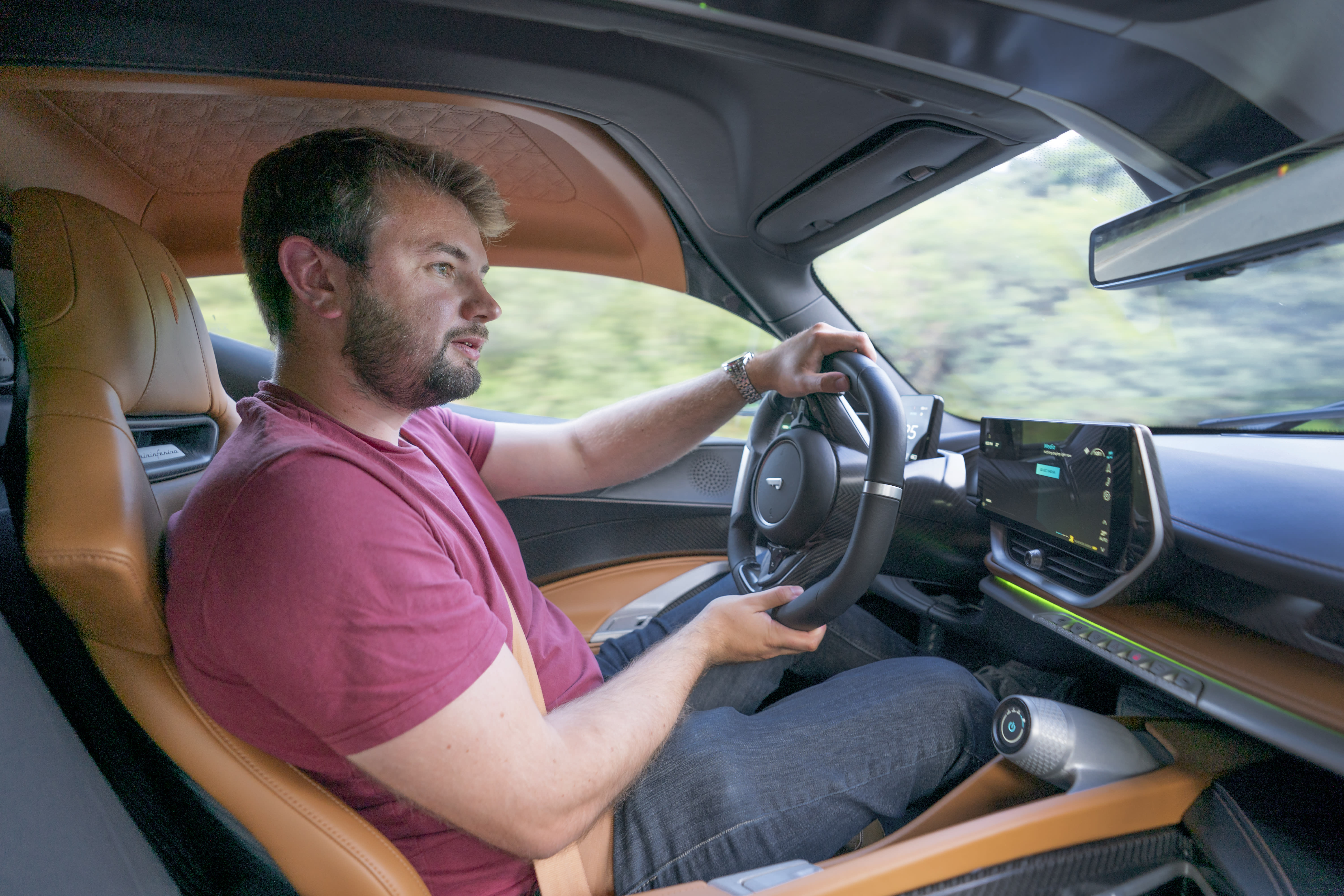
Smart has made a concerted effort to make its cars’ interiors feel clean and minimalist, and the #5 is just the same. The style is neat, clean and rounded, with very few buttons on the dash and only a handful on the steering wheel. It’s a cool look that’s sure to play well with customers, particularly given the smart materials and the robustness with which it’s all made. It feels like a premium – or at least semi-premium – product, which is exactly what Smart’s payrollers were after.
But as well as being stylish and well made, the cabin really excels with its technology. As standard, all #5s come with a 13-inch central touchscreen and a 10.25-inch digital instrument display, both of which are very sharp and easy on the eye. Admittedly, the central screen has one or two ergonomic shortcomings – it isn’t always that easy to navigate – but it looks good.

With so few buttons in the cabin, though, the screen has quite a few responsibilities, including accessing driving modes and climate control systems. Smart has tried to make life a bit easier with shortcuts and a kind of taskbar at the bottom of the screen, but you can’t help thinking some controls just work better as proper switches.
That small gripe aside, the rest of the #5’s technology is rather good, including the passenger display screen that appears on more upmarket models. The same size as the central screen, it sits in front of the front-seat passenger and allows them to watch TV shows or films, as well as accessing media and other functions that aren’t essential for driving. It’s a neat idea, and one that works fairly well, but it’s too easy for the driver to see – and therefore be distracted by – what’s on the screen.
All that said, some of the #5’s technology is a little more useful and impressive. The augmented reality head-up display, for example, superimposes information over the outside world, which is particularly helpful when it comes to navigation, while the other key bits of data, such as speed, are clear and easy to find.

Practicality & Boot Space
Whether you like the boxy exterior design or not, there’s no doubt it works wonders for interior space. The #5’s luggage compartment is vast, at 630 litres, putting it well ahead of the 585 litres you get from a Skoda Enyaq. Admittedly, in a space that big, you might not notice a 45-litre difference – it’s less than 10%, after all – but that difference is a mark of just how spacious the Smart is.
And, to live up to its name, the Smart complements its enormous boot with a front luggage bay under the bonnet. Exactly how big that space will be depends on which version you get, though. Because single-motor cars have their motor at the back, there’s loads of space in the ‘frunk’, but twin-motor cars lose some of that carrying capacity to accommodate the front motor. Still, Smart reckons the most capacious #5 models have a front luggage compartment big enough to take a cabin bag suitcase.
Don’t go thinking the luggage space comes at a cost to passengers, either. Space in the back is more than ample for two tall adults to feel comfortable, and the panoramic glass roof makes it feel even more spacious than it is. Even with the dark upholstery of a Brabus version, it’s airy enough to feel luxurious.

Safety
The #5 received a strong five-star rating when it was crash-tested by Euro NCAP, the European independent safety body. That means it’s among the safest cars on the market, and customers with families will be particularly pleased to see it achieve a 93% score for child occupant protection.
Hopefully, you’ll never have to sample the #5’s crashworthiness for yourself, and to help maximise your chances of keeping away from trouble, the #5 is packed with safety technology. In fact, Euro NCAP’s test of the car’s safety tech awarded it 92%, which is an incredibly high score, even by modern standards.
But with technology including autonomous emergency braking, which will stop the car automatically if the driver fails to respond to a hazard, and blind-spot monitoring, which tells you if a vehicle has wandered into the hard-to-see areas over your shoulders, you can rest assured the #5 is helping you to stay safe.
Of course, some of the technology necessary to get such a strong score from Euro NCAP is in fact deeply irritating. The speed limit alert system is legally mandated these days, but road infrastructure is complex, and systems are seldom flawless. The Smart’s tech is no exception, but it isn’t necessarily the easiest to switch off, which is a pity. Smart has tried to make it easier thanks to shortcuts in the touchscreen, but we hope an even more intuitive system will arrive in future.

Options
The #5 range is quite big and complex, with a multitude of different versions to choose from, so we’ll walk you through it. But rest assured all #5 models are well-equipped.
The base model is the Pro, which comes with the 76kWh battery and the rear-mounted, 340hp electric motor, as well as 19-inch alloy wheels, a panoramic glass roof and leather upholstery. And that’s before you look at the keyless start, 360-degree camera and the big central touchscreen or the digital instrument cluster. Or even the heated steering wheel and the heated front seats.
Above that is the Pro+ with the 100kWh battery and a 363hp electric motor, but roughly the same level of standard equipment. Then there’s the Premium version, which is designed to offer a bit more comfort, but gets the same 100kWh battery and 363hp motor as the Pro+. It also gets bigger 20-inch alloys, ventilated front seats and the passenger display screen, plus the augmented reality head-up display and a Sennheiser sound system.
Alongside that is the Pulse, which is the first of the all-wheel-drive versions, and gets the twin-motor, 588hp layout. But it misses out on some of the Premium’s equipment, such as the sound system, in exchange for the added power and off-road capability.
The range is topped, however, by the Brabus version, which is supposed to be the sportiest, and it backs that up with 646hp from its two electric motors. It also gets lots of Brabus styling tweaks, including the massive ‘B’ logos all over the shop, and it comes with all the toys. Leather and microsuede upholstery is combined with sporty trim, aluminium pedals and red stitching, while all the toys of the Premium model are present and correct.
For most, then, the Premium will be the favoured choice, thanks to its long range and ample equipment, but some might prefer the Pulse for its all-terrain capability. After all, an SUV needs to have a bit of off-road prowess, right?
Either way, the standard specification will be more than adequate, and it just comes to a choice of colours. We quite like the Pulsar Ruby Metallic and the soft Future Green, but there’s a healthy number of paint options for customers to pick through and find one that suits.

Rival Cars
With the electric SUV market picking up at a rapid rate, the #5 is facing an increasingly large number of important rivals. Perhaps the biggest challenge comes from the Skoda Enyaq, which has just been updated and comes with a cool new look, loads of space and a long range, as well as some much-improved technology.
Similarly, the closely related VW ID.4 and Ford Explorer offer practical and surprisingly upmarket competition, as does the more premium Audi Q4 e-tron. Then you have to consider the likes of the Volvo EX40, the Mercedes-Benz EQB and the Lexus RZ, all of which are wholly competent and upmarket alternatives.
But it isn’t just the premium stuff that the #5 is up against. Of equal competition to the Porsche Macan Electric is the MG S5 EV, which is a really capable and good-value car. Some will be drawn in by the competitive lease rates available for the Leapmotor C10, too, although that car doesn’t quite have the Smart’s polish either inside or on the road.
Other left-field rivals include the Renault Scenic, which is critically acclaimed for very good reason, and the Cupra Tavascan, which is less practical but very cool and great to drive.
Verdict & Next Steps
The #5 has proved beyond doubt that Smart can not only produce a large car, but it can produce a good one, at that. The #5 may not be perfect, but it’s easily a match for its more conventional and more established rivals, and that’s good going for what is, in essence, the revamped brand’s third car. Yes, it still has foibles, but it’s a smashing alternative to the Skoda Enyaq, and one that ensures the revitalised Smart brand is one to watch.
Where to next?
View our latest SMART #5 lease deals.
Call us on 0118 3048 688 or hit the green 'Enquire' button for more details.
Looking for a great leasing deal? Check out our incredible range of Special Offers and Lease Deals.
New SUV? Read our latest Reviews and find the right model for you.
Want to know more about leasing? Take a look at our comprehensive Leasing Guides.
Interested in everything motoring? Why not catch up on all the latest Car Leasing News.
**Score based on Select’s unique meta score analysis, taking into account the UK’s top leading independent car website reviews of the SMART #5.


.jpg)