
4.9 out of 5 47,645 reviews

Mon to Fri: | Sat:

The Complete Guide to EV Grants and Incentives

By David Lewis, Electric Vehicle & Clean Energy Journalist

Thinking of buying or leasing an electric vehicle? There’s never been a wider choice of cars, vans, and motorbikes, and there are also plenty of grants, tax breaks, and other incentives to make the switch to electric more affordable. 

But knowing which ones you’re eligible for (and how to actually get them) is far from straightforward. That’s what this guide’s for – whether you’re a private motorist, a business owner, a taxi driver or just curious about electric vehicles (EVs), here’s a detailed breakdown of what’s available.

UK's most trusted car leasing broker

Rated 4.9 out of 5 - 47,645 reviews

The UK's largest leasing broker

Leasing all leading makes and models

Affordable car lease deals

Industry leading competitive rates

Plug-In Vehicle Grants

There are a number of grants from the UK government available for plug-in vehicles, which can reduce the upfront costs of buying or leasing certain EVs. The grants are applied by the dealership at the point of sale, so you don’t need to apply yourself.

The current plug-in vehicle grants are:

Electric Cars

Electric Cars

The Electric Car Grant offers discounts of up to £3,750 for Band 1 electric cars and £1,500 for Band 2 models. It applies only to new cars with zero tailpipe emissions and a minimum battery range of 100 miles. Eligible vehicles must have a list price under £37,000, although higher trims up to £42,000 are allowed, as long as the battery/powertrain characteristics remain the same as the base model. All eligible manufacturers must hold science-based targets certification, reflecting verified commitments to reducing greenhouse gas emissions across their operations. Band 1 eligibility requires additional sustainability criteria, including lower carbon emissions from battery production and vehicle assembly. The grant scheme runs until 31 March 2030.
Electric Vans

Electric Vans

The Plug-in Van Grant (PiVG) offers grants of up to £2,500 for small electric vans with a gross vehicle weight under 2,500 kg, and up to £5,000 for larger vans weighing between 2,500 kg and 4,250 kg. The grant covers 35% of the purchase price up to these maximum amounts and is applied automatically at the point of sale. To qualify, vans must have zero tailpipe CO₂ emissions and be able to travel at least 60 miles on zero-emission power. This means only fully electric or hydrogen fuel cell vans are eligible – plug-in hybrid vans no longer qualify. The grant scheme runs until at least the 2026/27 financial year.

Electric Trucks

Electric Trucks

Trucks were added to the grant scheme in 2016, now known as the Plug-in Truck Grant (PITrG). In January 2026, the government announced a major grant funding increase of £18 million for trucks. The new grant levels are: up to £20,000 for small trucks (4.25 to 12 tonnes); up to £60,000 for mid-sized trucks (12 to 18 tonnes); up to £80,000 for larger trucks (18 to 26 tonnes); and up to £120,000 for the largest lorries (over 26 tonnes). To qualify, trucks must have zero tailpipe CO₂ emissions and be able to travel at least 60 miles emissions free. This means only fully electric or hydrogen fuel cell trucks are eligible. The grant scheme runs until at least the 2026/27 financial year, and applies to Great Britain (Northern Ireland has different criteria).

Electric Taxis

Electric Taxis

The Plug in Taxi Grant (PiTG) provides a discount on the price of eligible new, wheelchair accessible, ultra low emission taxis of up to £4,000 or £3,000, depending on the vehicle’s range, emissions and design. Category 1 offers up to £4,000 for taxis with a zero emission range of at least 70 miles and emissions below 50 gCO₂/km, while Category 2 offers up to £3,000 for taxis with a zero emission range of 10 to 69 miles and the same emissions limit. The grant is only available for new purpose built taxis; second hand taxis and conversions carried out after registration are not eligible. Current announcements indicate the scheme is expected to close in April 2026.

Electric Motorcycles

Electric Motorcycles

The Plug-in Motorcycle Grant (PiMG) was launched in 2016 to help bridge the price gap between zero-emission motorcycles and petrol motorcycles. It applies only to new, OZEV-approved zero-emission motorcycles that meet technical and performance criteria and are priced below £10,000 (including VAT and delivery). Eligible motorcycles must have a minimum electric range of roughly 31 miles (technically, the distance is 50 km). The grant is applied as a discount at the point of sale, with no application required from the buyer. Manufacturers or authorised dealers apply for vehicle approval and claim the grant, which provides a 35% discount up to a maximum of £500 on qualifying models. The grant scheme runs until 5 April 2026.

Wheelchair-Accessible EVs

Wheelchair-Accessible EVs

The Plug-in Wheelchair Accessible Vehicle Grant (PiWG) supports new zero-emission WAVs converted from passenger (M1) vehicles. The base vehicle must have a recommended retail price below £50,000, excluding conversion costs. Only new vehicles at first registration are eligible, including pre-registration conversions, while post-registration conversions are excluded. Eligible WAVs must have no tailpipe emissions and a minimum zero-emission range of 70 miles. The grant is applied as a discount at point of sale, offering up to 35% off, capped at £2,500. The grant scheme runs until 5 April 2026.

Home Charger Grants

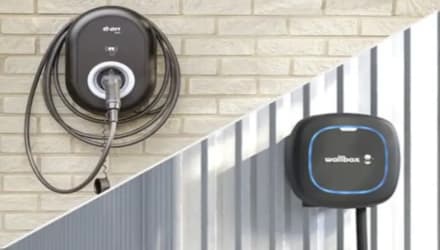
If you own a flat, or rent any residential property (including shared ownership), and you have a private off-street parking space, you may be able to reduce the cost of installing a home EV charger through the EV chargepoint grant.

The grant covers 75% of the purchase and installation cost, up to a maximum of £350 – whichever is lower. You must own, lease, or be the registered keeper of an OZEV-approved electric vehicle to qualify.

You cannot apply as an owner-occupier of a house, as the household scheme is now targeted at renters and flat owners, rather than homeowners. The previous Electric Vehicle Homecharge Scheme closed to homeowners in April 2022.

You will need to use an OZEV-approved installer and an eligible chargepoint. Your installer will handle the grant process on your behalf, including submitting photographs and documentation to OZEV after installation.

No Off-Street Parking?

If you don’t have access to private off-street parking – such as a driveway, garage, or residential car park – but have suitable on-street parking outside your home, a separate grant is available. This covers 75% of the cost of buying and installing an EV charger, up to a maximum of £350, provided you also install a cross-pavement charging solution such as a cable channel.

You will need permission from your local highways authority for the cross-pavement installation before applying. Temporary solutions such as cable covers or mats are not eligible. See our partner Kerbo Charge for more details.

Workplace And Landlord Charger Grants

  • The Workplace Charging Scheme offers up to 75% off purchase and installation costs, capped at £350 per socket, for up to 40 sockets across all sites per applicant. 
  • Landlords can claim an EV chargepoint grant of either £350 or 75% off the cost to buy and install a socket, whichever is lower. Each financial year, you can get up to 200 grants for residential properties and 100 grants for commercial properties.
  • Residential landlords can also apply for an EV infrastructure grant which offers 75% off the cost of the work up to a maximum of £30,000. You can apply for up to £350 per chargepoint socket installed and up to £500 per parking space enabled with supporting infrastructure. If you’re installing sockets in residential car parks, you can get up to 30 infrastructure grants each financial year, and each infrastructure grant must be used for a different property.
  • SMEs can apply for the EV infrastructure grant for staff and fleets. The grant covers 75% of the cost of the work, up to a maximum of £15,000, and you can receive up to 5 grants across 5 different sites. It includes up to £350 per chargepoint socket installed and up to £500 per parking space enabled with supporting infrastructure.
  • State-funded schools and education institutions can apply for 75% off the cost to buy and install chargepoints, up to £2,500 per socket, for up to 40 sockets across all sites (including any applications made previously via the Workplace Charging Scheme).
  • Head to the official Government page for more details on all of the above. 

Tax Breaks For Going Electric

Opting for an EV can open you up to several tax advantages, especially if you’re a company car driver or run a business.

Company Car Tax (Benefit-in-Kind)

  • For pure electric company cars (0g CO₂/km), the tax percentage was frozen at 2% up to (and including) the 2024/25 tax year, but is 3% for the 2025/26 tax year (6 April 2025 to 5 April 2026).
  • The government has set future rates for zero-emission cars at 4% in 2026/27, 5% in 2027/28, 7% in 2028/29, and 9% in 2029/30.
  • Higher-emitting petrol and diesel company cars can be taxed at much higher percentages (up to 37% in 2025/26, depending on CO₂ and other factors).

Capital Allowances

  • Businesses acquiring a new, zero-emission car can claim 100% first-year allowance (FYA), and 100% FYA is also available for qualifying expenditure on electric vehicle chargepoints.
  • These 100% FYAs have been extended to 31 March 2027 for Corporation Tax and 5 April 2027 for Income Tax.
  • FYAs are generally not available where the asset is acquired for leasing.

Road Tax (Vehicle Excise Duty)

  • EVs are no longer exempt from VED.
  • Electric, zero- or low-emission cars registered on or after 1 April 2025 pay the lowest first-year rate (£10), then the standard rate (£195) from the second year onwards.
  • Electric, zero or low emission cars registered between 1 April 2017 and 31 March 2025 will pay the standard rate (£195).
  • The expensive car supplement can apply to EVs registered from 1 April 2025. The threshold for zero-emission cars increases from £40,000 to £50,000 from 1 April 2026 (and applies to zero-emission cars registered from 1 April 2025 onwards when licensing from 1 April 2026).

City Perks: ULEZ, Clean Air Zones, Low Emission Zones and other city-centre charges

UK city schemes aren’t all the same. England’s Clean Air Zones (CAZ) cover Bath, Birmingham, Bradford, Bristol, Portsmouth, Sheffield and Newcastle / Gateshead. London has ULEZ and the Congestion Charge (separate schemes). Scotland runs Low Emission Zones (LEZ) in Glasgow, Edinburgh, Aberdeen and Dundee. Some places have standalone access charges, such as Oxford’s ZEZ and Durham’s city-centre charge.

  • Bath’s Clean Air Zone does not charge private cars and motorbikes. Charges apply mainly to non-compliant, higher-emitting vehicle types such as taxis and vans (and other commercial vehicles).
  • Bath & North East Somerset Council’s financial support scheme has now ended, after helping to adapt or replace more than 900 non-compliant vehicles. 


  • Birmingham operates a vehicle scrappage and travel credit scheme linked to the Clean Air Zone, with packages worth up to £4,000.
  • Eligibility for the worker scrappage scheme is currently restricted to those who earn less than £32,000 per year and work at least 18 hours a week within the zone. As rules can change, it's still recommended to verify the latest figures on the official Brum Breathes site before applying.

  • Private cars are exempt from Bradford’s Clean Air Zone charges.
  • Bradford previously offered upgrade grants for small vans and minibuses (up to £4,500), but the grant schemes are now closed to new applications.

  • Bristol has a £42 million package of support linked to its Clean Air Zone.
  • For cars, support can be up to £2,000 in total (loan, grant, or a combination), with a maximum grant of £1,500. Priority groups include individuals and Blue Badge holders earning less than £35,000, plus sole traders, charities and smaller businesses that meet the scheme criteria.
  • The scheme also includes measures such as free electric bike loans and free bus tickets.

  • Durham has a Road User Charge Zone (a city-centre access charge), currently £5 per day during the stated operating hours. 

  • ULEZ: The ULEZ – or 'Ultra Low Emission Zone' – covers all London boroughs (Greater London). Vehicles that don’t meet the emissions standard pay £12.50 per day. For UK-registered full-electric cars, the process is seamless: TfL’s cameras use DVLA data to identify the vehicle as zero-emission automatically, so no registration or payment is required. Note that non-UK registered EVs must still be registered manually with TfL to avoid being charged.
  • Congestion Charge: The daily charge increased to £18 on 2 January 2026. While the previous 100% Cleaner Vehicle Discount has ended, a new tiered discount is available. Electric cars receive a 25% discount (£13.50), while electric vans, HGVs and quadricycles receive a 50% discount (£9).
  • Auto Pay requirement: To receive these discounts, the vehicle must be registered for TfL Auto Pay. The previous system of paying a separate £10 annual registration fee for the discount has been abolished; the discount is now applied automatically based on DVLA data once the vehicle is added to an Auto Pay account. If you enter the zone without Auto Pay, you will be charged the full £18, regardless of the vehicle's fuel type. 


  • No driver charges: There is now no charging Clean Air Zone in Greater Manchester. All vehicles – including older private cars, vans, and HGVs – can drive across the 10 boroughs without facing daily fees or entry charges.
  • Signage and enforcement: Legacy ‘Under Review’ signs are being removed in early 2026. Roadside cameras remain active, but are now used exclusively by the police for crime detection and road safety, rather than for emissions enforcement.
  • Investment-led plan: The region has decided to meet air quality targets by investing £86 million into the Bee Network electric bus fleet and taxi upgrade grants, avoiding financial penalties for individual motorists.

  • The Clean Air Zone applies to older and more polluting taxis, vans, buses, coaches and heavy goods vehicles, not private cars and motorbikes.
  • Grant funding amounts include up to £16,000 for HGVs and buses/coaches (vehicle-type dependent).
  • Scheme terms include an ownership requirement, for example, being the registered keeper prior to 18 July 2022.
  • Newcastle City Council says the grant application process closes on 30 January 2026. 


  • Oxford has a Zero Emission Zone (ZEZ), where zero-emission vehicles, including fully electric cars and vans, can be used without a daily charge, while other vehicles may be charged (typically 7am to 7pm, unless discounted or exempt).
  • Note: Oxford also introduced a temporary congestion charge for cars (separate to the ZEZ) and electric cars are not exempt from that charge.

  • Portsmouth’s CAZ (Class B) does not charge private cars, motorcycles, or vans.
  • Charges apply only to non-compliant HGVs, buses, coaches, taxis, and private hire vehicles.

  • Sheffield’s CAZ (Class C) exempts private cars and motorcycles.
  • Non-compliant vans, LGVs, and taxis are charged £10 per day, while HGVs and buses pay £50.

  • Scotland’s four city LEZs are Glasgow, Edinburgh, Aberdeen, and Dundee. EVs are generally compliant because the rules target the most polluting vehicles.
  • Enforcement began in Glasgow on 1 June 2023, in Dundee on 30 May 2024, in Edinburgh on 1 June 2024, and in Aberdeen on 1 June 2024.

Other Benefits To Keep In Mind

As well as the financial support available to help make the switch to electric vehicles, there are other benefits to ditching diesel and petrol. Charging an electric car at home is far cheaper than filling a fuel tank, especially if you use off-peak electricity. There are also fewer moving parts in an electric motor, so maintenance and servicing costs are often lower.

Some local councils still offer free parking for EVs, and a few areas also let EVs use bus lanes (although we recommend double checking before sailing down illicit roads).

These perks are changing rapidly, with schemes being phased out and new ones being introduced. It’s well worth keeping an eye on deadlines and keeping in touch with your car dealer to see what you can claim. With the right support, going electric can be a very cost-effective move.

Latest Electric and Hybrid Lease Deals

SEE ALL OUR SPEICAL OFFERS

All About Electric Vehicles

Check out our dedicated EV zone for all things electric

LEARN MORE

New to Car Leasing?

Discover the many advantages of leasing a vehicle

LEARN MORE

Business & Fleet?

Comprehensive fleet management solutions for your business

LEARN MORE

Special Offers

Browse our special offers on electric, hybrid and traditional cars

VIEW ALL