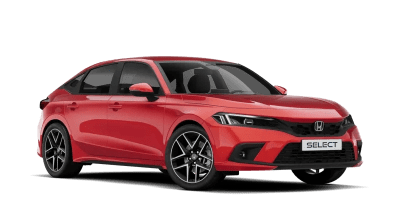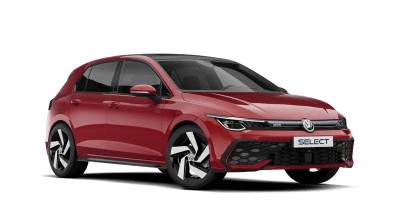

Honda Civic Hatchback
The Honda Civic is a household name for good reason. This hybrid is the perfect blend of a hot hatch with a focus on comfort and economy. The comfortable interiors offer on-board technology with a sleek exterior design.
Mon to Fri: – | Sat: –

With different types of electric car available, it can be hard to understand what all the confusing terminology means – and which model is right for you.
If you’re looking for electric driving without the hassle of plugging in, read our guide to self-charging cars and find out how they work.
A self-charging car – also known as a full hybrid, self-charging hybrid, or Hybrid Electric Vehicle (HEV) – gets its name because it charges its battery without needing to be plugged into an external power source.
This differs from a Plug-in Hybrid Electric Vehicle (PHEV), which must be connected to a charger to replenish its battery in full. A HEV combines a petrol engine with an electric motor and a very small battery, recovering energy through regenerative braking and using the internal combustion engine to help maintain charge. This can improve fuel efficiency and reduce running costs.
If you're considering a 100% electric experience, check out our guide to Battery Electric Vehicles (BEV).
Self-charging hybrids have a fuel tank, an electric motor, and a small battery. The car automatically switches between petrol power, electric power, or a combination of the two, depending on driving conditions.
The battery is charged as you drive. When the car brakes or coasts, the electric motor acts as a generator, recovering energy that would otherwise be lost and storing it in the battery.
The petrol engine can also help maintain the battery’s charge when needed. This means a full hybrid does not need to be plugged in. Instead, the system manages charging and power delivery automatically to improve fuel efficiency, especially around town and in stop-start traffic.
Self-charging hybrids can be a good choice if you regularly drive mixed routes and want better fuel economy without needing to plug in. They combine the familiarity of a petrol engine with an electric motor and battery, allowing the car to use electric power at lower speeds and recover energy while braking.
This can improve fuel consumption and reduce CO₂ emissions compared with a conventional petrol or diesel car, while also removing any need to plan charging stops.
However, a self-charging hybrid will not suit every driver. If you spend most of your time on long motorway journeys, the efficiency benefits may be more limited because the petrol engine does more of the work. And if you mainly make short local journeys, a fully electric car could cut emissions further and cost less to run.
For many drivers, a self-charging hybrid works best as a practical middle ground between a traditional petrol car and a fully electric vehicle, though you can also consider a plug-in hybrid which brings you closer to the 100% electric experience.
Many car manufacturers offer models with different engine types, from petrol and diesel engines to electric, full hybrid and plug-in hybrid alternatives.
So, if you’re looking for the efficiency of an electric car without worrying about plugging in, find some of our recommended self-charging hybrid options below:
The Honda Civic is a household name for good reason. This hybrid is the perfect blend of a hot hatch with a focus on comfort and economy. The comfortable interiors offer on-board technology with a sleek exterior design.
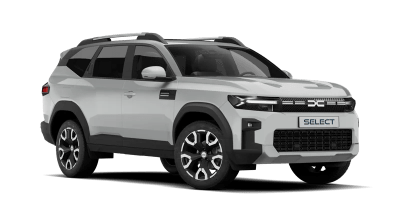
The Dacia Bigster is a no-nonsense car at an ultra-competitive price. This fuel-efficient hybrid is large, practical and reliable – perfect for families who need space, without breaking the bank.
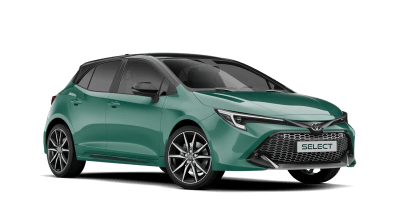
This Toyota boasts modern styling and is designed for real-world utility. The Corolla is highly regarded as one of the most economical and practical cars on the market, with an impressive 61.4 mpg.
“Self-charging” means the car charges its small hybrid battery as you drive, rather than being plugged into an external charger. It does this by recovering energy when braking or coasting, and by using the petrol engine when needed. The term usually refers to a full hybrid, not a fully electric car.
No. A self-charging hybrid does not need to be plugged in. The battery is charged automatically while driving through regenerative braking and support from the petrol engine. This makes it different from a plug-in hybrid, which has a larger battery and needs to be connected to a charger.
A self-charging hybrid can usually drive only short distances (typically 1-2 miles) on electric power alone, often at low speeds or in stop-start traffic. The exact distance depends on the model, battery size, speed, and driving conditions. Unlike a fully electric car, it is not designed for long electric-only journeys.
A self-charging hybrid uses a petrol engine, electric motor, and a very small battery, but does not plug in. A plug-in hybrid has a larger battery and can be charged from an external power source. A fully electric car has no petrol engine and runs entirely on electricity from a much larger battery.